Interviews
Keeping the Subscriber You Already Won: COLIBRIX ONE's Approach to Recurring Payments

Financial IT speaks with Slava Trubnikov, Sales Manager at COLIBRIX ONE, about how the company's Recurring Payments product helps SaaS, e-commerce, and membership platforms turn one-time buyers into long-term subscribers. We discuss how merchants keep full control over pricing without rebuilding their integration, how COLIBRIX ONE tackles involuntary churn under strict SCA/3DS rules, and how subscription businesses can move recurring payments away from app stores without losing conversion at checkout.
COLIBRIX ONE calls its approach 'Pure Recurring Execution' — the merchant decides what to charge, and your API just executes it. What does that look like in practice — can a merchant change a subscriber's charge amount or frequency without rebuilding their integration or asking for re-authorization?
That's really the core of how we've built the product. The merchant's system stays in charge of the business logic - what to charge, when, and under which pricing model. Our API's job is simply to execute that charge on demand.
In practice, a merchant can adjust a subscriber's amount or frequency at any point, through the same API call, without touching their integration or asking the customer to re-authorize. You could charge one amount this week and a different one next week, and from the subscriber's side, nothing changes.
We kept it this way deliberately: the moment a payments provider starts dictating how a merchant prices their product, you've added friction that wasn't there before. Our role is to be the gateway, not the pricing engine.
Involuntary churn, losing a subscriber because a card payment fails, is one of the biggest hidden revenue leaks in subscriptions. What actually goes into keeping approval rates high across the US, UK and Europe, given how differently authentication requirements work in each, from SCA/3DS in the UK and Europe to the fraud rules that dominate in the US?
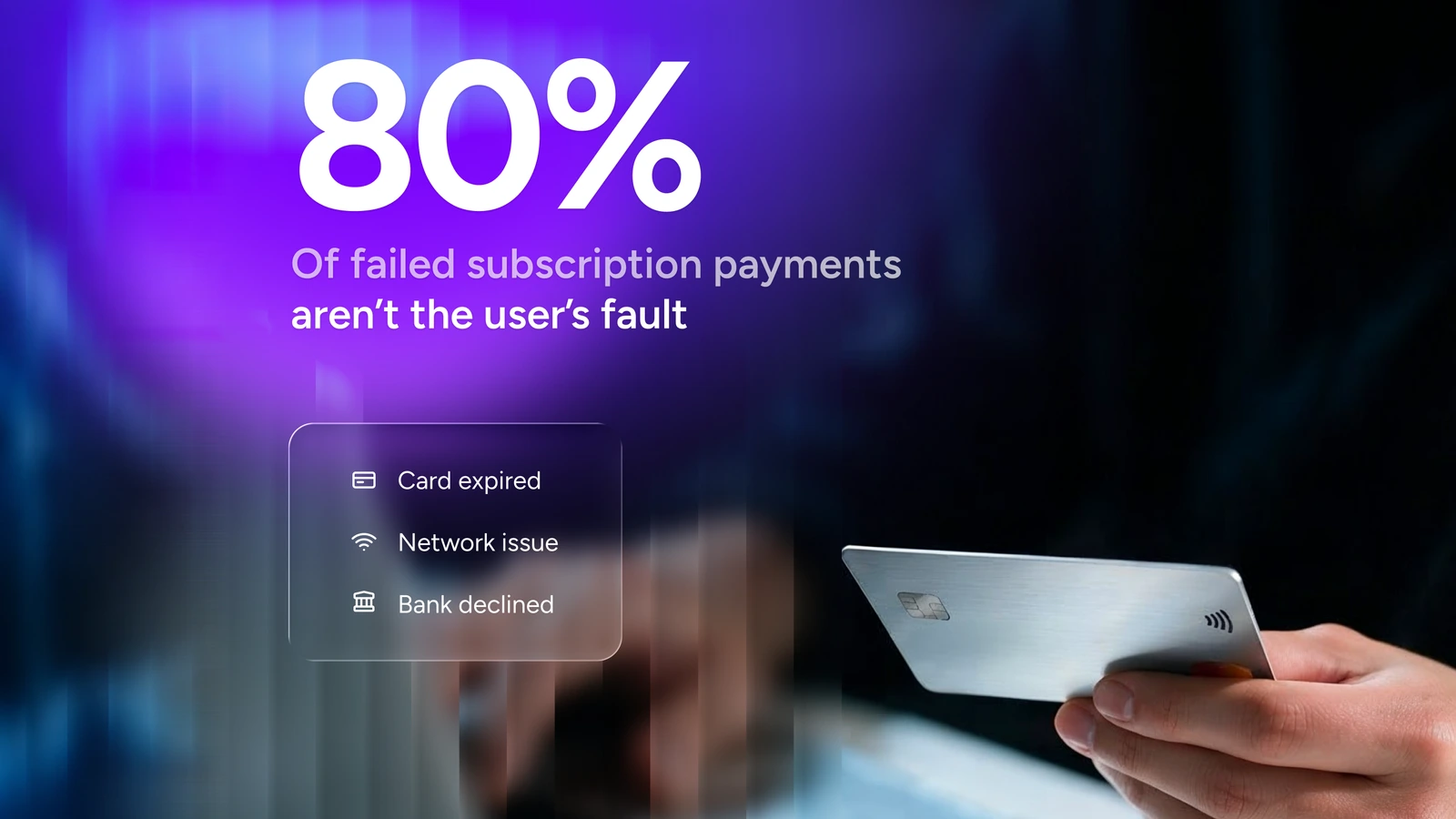
Involuntary churn is one of the most underestimated revenue leaks in subscription businesses, precisely because it doesn't look like a churn problem on the surface - it looks like a failed transaction. A subscriber didn't cancel; a card payment simply didn't go through.
Our approach starts with visibility. Through Full Transaction Analytics, merchants can track every recurring transaction in real time, monitor cash flow, and see subscription health rather than finding out about failed payments after the fact.
Authentication requirements are where the US, UK, and Europe diverge most. In the UK and Europe, Strong Customer Authentication under PSD2 means the first payment — the customer-initiated transaction - typically requires full 3DS authentication, while recurring charges after that are merchant-initiated transactions and can qualify for an SCA exemption when flagged correctly. In the US, there's no equivalent mandate - issuers rely on risk-based fraud scoring instead, and 3DS is optional.
That's where our Unified Global Acceptance comes in: a merchant onboarded with us in Europe can process subscription payments on US-issued cards through the same integration, instead of building that capability separately. We also support all major card networks alongside Apple Pay and Google Pay through one unified subscription gateway, so merchants aren't relying on a single rail that might underperform in a given market. Put together, this is what keeps approval rates consistently high across all three markets.
Many subscription apps are locked into App Store or Google Play billing simply to avoid losing traffic and conversion at checkout - even though it means giving up a meaningful share of every transaction to the platform. What makes it possible for a subscription business to move recurring payments away from the app store without losing that conversion, and where does COLIBRIX ONE fit into making that switch safe?
That fear is completely understandable - it's one of the first questions we get. Businesses have built their subscriber base around app store checkout, and moving away from it, even to keep more of every transaction, feels risky if it costs conversion.
In practice, the merchant keeps full control of that transition - they decide how and when subscribers land on their own web page, whether that's through in-app messaging, email, or another channel. Our role is narrower and more concrete: once a subscriber is on that web page, our API powers the actual payment execution behind it, so the merchant isn't building a payments stack from scratch just to make the move.
So the switch isn't about us replacing anything on the app side - it's the merchant redirecting where subscribers pay, with us handling the payment layer on the web page they already control.
Practically speaking, what does that migration actually look like on the technical side — does COLIBRIX ONE plug directly into a merchant's existing payment orchestrator, or does it require rebuilding the checkout and payment flow from scratch?
We plug in - we don't ask merchants to rebuild. COLIBRIX ONE connects with all major payment orchestrators out of the box, so there's no need to tear down an existing stack or start from scratch.
Depending on what a merchant needs, we can handle the primary payment execution for their recurring charges, or sit alongside their current setup and handle a specific slice - say, one region's traffic - without disrupting what's already running.
That flexibility matters because very few merchants start with a blank slate. Our job is to fit into their existing stack, not force a rebuild around us.
With Unified Global Acceptance across the US, UK, and Europe — cards, Apple Pay, Google Pay — plus a Dedicated Human Partner for onboarding, what does that "human layer" add on top of the API that a purely self-serve platform typically can't offer? Why does a personal account manager still matter in a business that's fundamentally API-driven?
An API can execute a charge, but it can't sit with you through compliance onboarding or pick up the phone when your payment setup gets complicated. That's what the Dedicated Human Partner is for.
Every merchant gets a personal account manager who handles onboarding and stays with the business well beyond the first transaction - not a rotating queue of support tickets, but one person who already knows your setup.
It matters even in an API-driven business because payments infrastructure isn't "set and forget." Pricing models change, new markets get added, and issues come up at inconvenient times. A dedicated person who already knows your account means those moments get resolved faster, without your recurring revenue sitting exposed in a support queue.